From kiosk to healthcare infrastructure platform
Dero(a)d™
Exploring how modular access points could bring selected healthcare capabilities closer to where people live, work, and gather.
Deroad Technology
3 min read
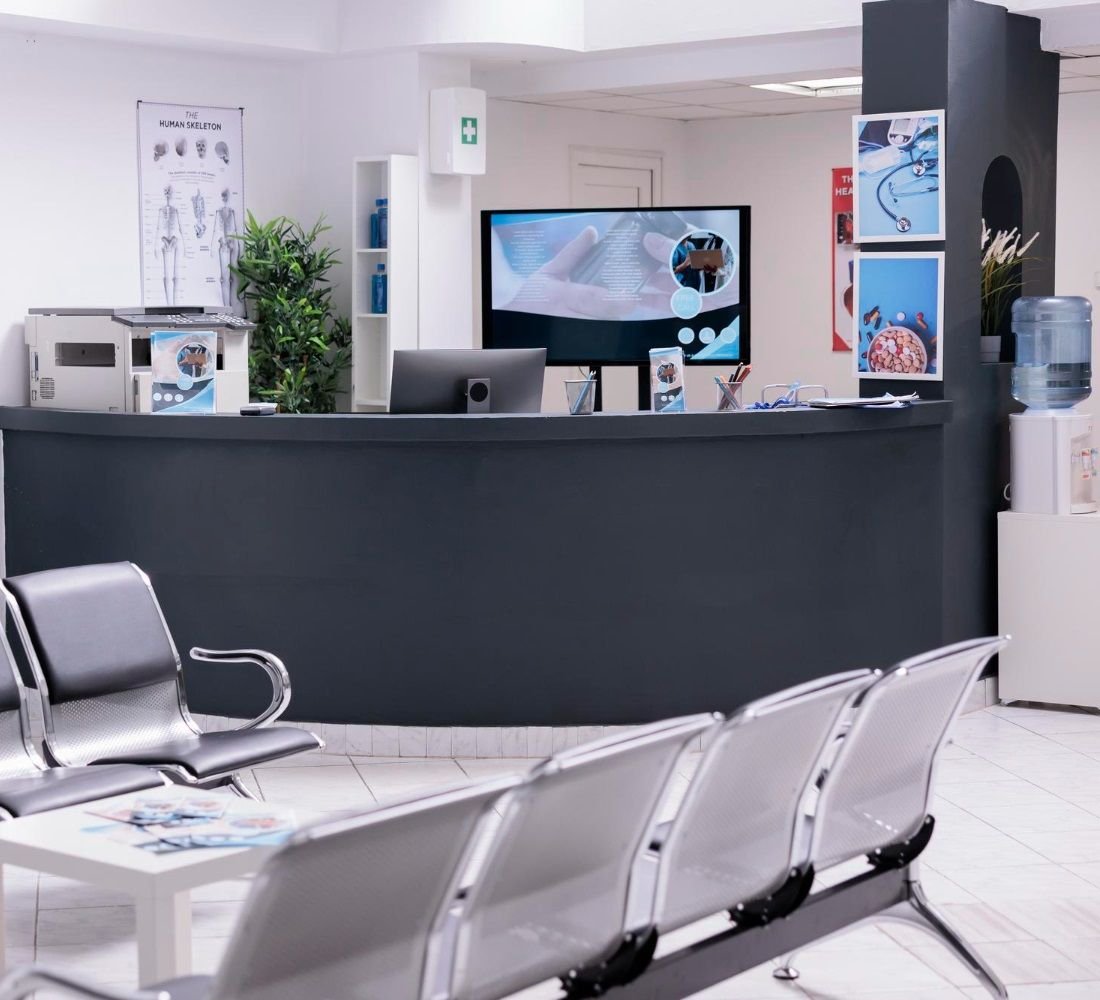
We usually think of a clinic as a single place where everything happens: check-in, measurements, consultation, tests, and sometimes medication. But not every part of care needs a full clinic around it. What if some of those capabilities could be separated, connected, and placed closer to people?
A modular approach starts by looking at a clinic as a set of capabilities rather than a building. Some of those capabilities need a full facility, specialized equipment, or in-person clinical teams. Others are simpler, more frequent, and well suited to a smaller, connected setting.
The goal is not to shrink care. It is to place each capability where it serves people best.
Depending on the community and the partners involved, a modular access point could support:
Each of these would connect back to existing providers rather than operate on its own.
A modular model is not a substitute for clinics, hospitals, or the people who work in them. Complex diagnosis, procedures, emergencies, and many forms of ongoing treatment belong in full facilities with the right teams and equipment. A well-designed access point should make those services easier to reach, by catching needs earlier and routing people to the right place.
Our vision is not to replace the healthcare system. It is to make it more connected, more accessible, and more responsive.
Turning a modular clinic from an idea into something safe and useful raises practical questions:
These questions shape the physical design as much as the technology does.
This is why the Dero(a)d™ roadmap begins with a single location. The first phase is about proving the kiosk: validating patient experience, telehealth, diagnostics, connectivity, workflow, safety, specimen handling, and operational data in one place before expanding. A modular clinic only earns its place by working well for the people who use it.
Whether you lead a health system, an FQHC, a public health program, or a technology company, we’d like to hear what you’re working on.